
Airport to Cruise Port Transportation: The Complete U.S. Guide
What airport to cruise port transportation really means
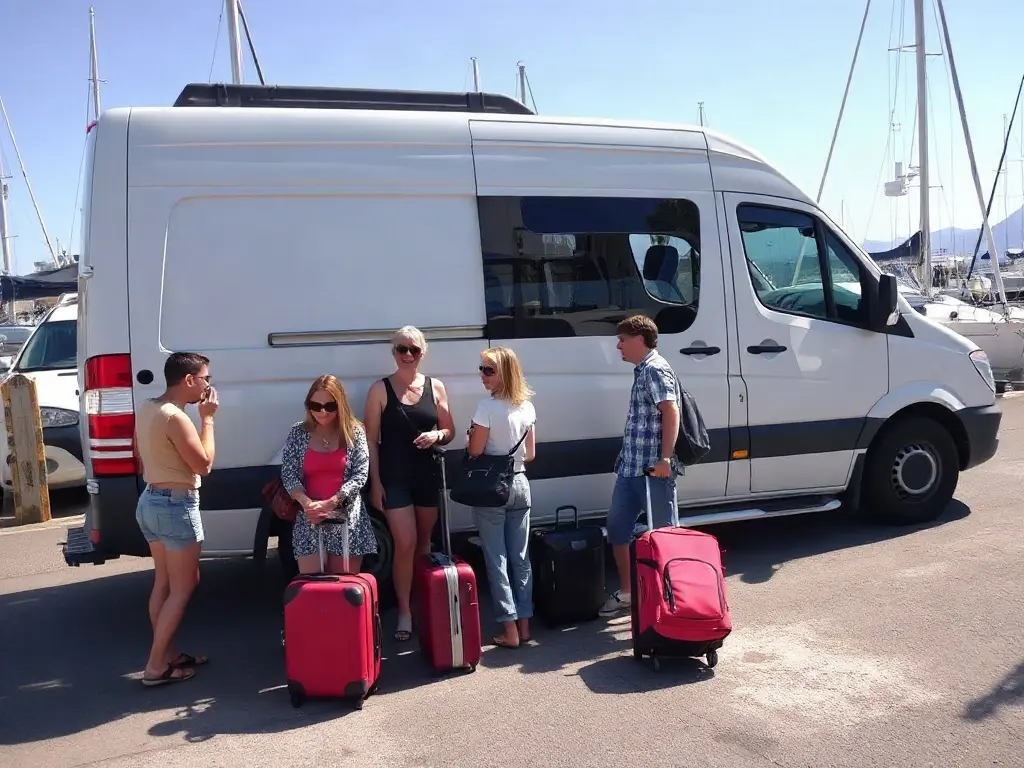
Airport to cruise port transportation is the ground ride that connects your flight to your ship. In most U.S. port cities you can choose a taxi, a rideshare such as Uber or Lyft, a shared shuttle, a cruise line bus, or a pre-booked private transfer. The right choice depends on distance, group size, luggage, and how much time you have before check-in closes.
That definition sounds simple, but anyone who has stood at a curb at 11:15 a.m. on a Saturday in Miami with four suitcases, two children, and a ship scheduled to leave at 4 p.m. knows the details matter. This guide is our complete, independent pillar resource on the subject. It covers the main U.S. homeports, the real tradeoffs between ride types, how to time your arrival and departure, and how to plan for families, groups, accessibility needs, and yacht or marina trips.
We wrote it for American travelers and for international visitors flying into the United States to start a cruise. Every section links to a deeper route guide when you need more detail. If you only need a ride, you can request a transfer at any time. If you want to understand your options first, keep reading.
Who this guide is for
- First-time cruisers who want to know what embarkation day actually looks like.
- Families traveling with children, car seats, strollers, and more bags than they planned.
- Groups such as wedding parties, reunions, and friends sailing together.
- Travelers with mobility needs who need a ramp or lift vehicle and terminal assistance.
- Yacht charter guests and crew heading from an airport to a marina.
- Experienced cruisers comparing a new homeport with the ones they know.
What this guide does not do
We do not sell cruise tickets, we are not affiliated with any cruise line, airport, or port authority, and we do not publish invented fares. Taxi rates, rideshare prices, and port rules change. Where a figure matters, we tell you where to confirm it on an official website. Distances and drive times below are approximate planning figures based on typical routes and normal traffic; your trip can be faster or slower.
Why the ground transfer deserves real planning
Most cruise travelers spend weeks choosing a ship, a cabin, and shore excursions, and about five minutes thinking about how they will get from the airport to the terminal. Yet the transfer is the one link in the chain with a hard deadline. A cruise ship will not wait for a single late passenger, and a missed embarkation can mean flying to the next port of call at your own expense, if that is even possible.
The good news is that a little planning removes almost all of the risk. Knowing the distance, the busiest hours, the pickup rules at your airport, and the exact terminal for your ship turns embarkation day into the relaxed start it should be. The same is true at the end of the trip, when thousands of passengers leave the ship within a few hours and head for the same airports.
Ground transfers also shape your budget more than many travelers expect. A long metered taxi, a surge-priced rideshare, or two separate cars for one family can cost more than a planned private van. On the other hand, a couple traveling light on a short route rarely needs anything more than the taxi stand. This guide helps you tell the difference before you land.
The five ways to get from the airport to your ship
Every major U.S. cruise city offers roughly the same menu of options. What changes from city to city is the distance, the traffic pattern, and the local rules for taxis and rideshare pickup. Here is how the five main choices compare.
| Option | How you book | Price style | Best for | Main drawback |
|---|---|---|---|---|
| Taxi | Airport taxi stand | Meter, or a regulated flat rate on some routes | Short trips, simple plans | Lines at peak hours; space for luggage limited |
| Rideshare (Uber, Lyft) | App on arrival | Dynamic, can surge | Couples, light packers, price comparison | Surge pricing, designated pickup zones, driver cancellations |
| Shared shuttle | Online in advance | Per person | Solo travelers and couples on long routes | Multiple stops, fixed schedules |
| Cruise line transfer | Through your cruise line | Per person | Hands-off travelers | Waiting for the bus to fill; slower |
| Private pre-booked transfer | Online, email, or phone in advance | Quoted per vehicle | Families, groups, lots of luggage, car seats, accessibility | Requires planning ahead |
Taxis: regulated, available, and sometimes the best deal
Taxis are the default option at every U.S. airport that serves a cruise port. They wait at a dedicated stand outside baggage claim, and a dispatcher usually assigns you the next car. Taxi fares are regulated by local governments. In some cities, specific routes such as Miami International Airport to PortMiami use a flat rate set by the county rather than the meter, which makes the price predictable regardless of traffic.
The advantages are clear: no app, no advance booking, and a licensed, regulated vehicle. The disadvantages show up at peak times. When several ships turn around on the same morning, taxi lines can grow long, and a standard sedan may not fit a family’s luggage. If you need a larger vehicle, ask the dispatcher for a van or minivan, but availability is not guaranteed.
Rideshare: flexible, but watch the surge
Uber and Lyft operate at almost every airport near a U.S. cruise port. Airports restrict where rideshare drivers can pick up, usually in a signed rideshare zone on a specific level of the terminal or parking garage. At Los Angeles International Airport, for example, most taxi and rideshare pickups happen at a separate lot called LAX-it, reached by a short shuttle ride.
Rideshare’s strength is price transparency at the moment you book and the ability to choose a larger vehicle class, such as UberXL. Its weakness is dynamic pricing. Saturday and Sunday mornings in Miami, Fort Lauderdale, and Port Canaveral are exactly when demand spikes, and prices can climb well above a regulated taxi fare. Drivers can also cancel, which costs you time.
Shared shuttles: economical on long routes
Shared shuttle services are most useful on longer trips, such as Orlando International Airport to Port Canaveral or Houston’s Bush Intercontinental Airport to Galveston, where a private car costs more. You book a seat in advance, meet the shuttle at a set point, and share the ride with other cruisers. Expect stops at multiple terminals and a schedule that may not match your flight exactly.
Cruise line transfers: coordinated and simple
Most major cruise lines sell their own bus transfers from the main airport serving each homeport. The main benefit is coordination. Staff in branded clothing often meet you at the airport, and if your flight is delayed, the line is aware of it, especially if you also booked air through the cruise line. The tradeoff is time: buses usually wait until they are reasonably full, and you may wait for other passengers’ luggage.
Private transfers: the planned option
A private transfer is a car, SUV, or van you reserve in advance for your group alone. The provider gives you a written quote for the vehicle, often including tolls, and assigns a pickup time. Good providers track your flight and adjust if you are delayed.
Private transfers make the most sense when you have:
- Three or more travelers, so the per-person cost approaches a shuttle.
- More than two large bags per person.
- Children who need car seats.
- A traveler who uses a wheelchair or needs extra help.
- A long route where rideshare surge pricing is a real risk.
- A post-cruise morning when you want to skip the taxi line entirely.
That is the type of service we focus on. If it fits your trip, you can send a transfer request in about a minute.
How to choose: a simple decision framework
You do not need a spreadsheet. Ask yourself four questions.
1. How far is the airport from the port?
Short routes, like Fort Lauderdale-Hollywood International Airport (FLL) to Port Everglades or San Diego International Airport (SAN) to the B Street Cruise Ship Terminal, are only a few miles. A taxi or rideshare is usually the easiest choice. Long routes, like Orlando to Port Canaveral or Bush Intercontinental to Galveston, cover 45 to 70 miles, and a shared shuttle or private transfer often makes more sense.
2. How many people and bags?
Count honestly. A sedan typically takes about two large suitcases plus carry-ons. A family of four with four big bags needs an SUV or minivan. A group of ten needs a passenger van, and even then luggage space shrinks when every seat is full. Read our guide to cruise port transportation for large groups for a fuller luggage chart.
3. When are you traveling?
Weekend mornings at the big Florida ports are the busiest times in the U.S. cruise calendar. If you land at 10 a.m. on a Saturday, plan for lines and surge pricing. If you travel midweek or stay overnight before your cruise, the transfer is usually easier.
4. Do you need special equipment?
Car seats, wheelchairs, scooters, and oversized items like golf bags or dive gear rule out many standard rides. Book a vehicle that confirms the equipment in writing. See our guides to traveling with car seats and wheelchair accessible transfers.
Rule of thumb: Couples with light luggage on a short route can take whatever is quickest at the curb. Everyone else benefits from deciding before the flight lands.
Miami: PortMiami transportation
PortMiami, located on Dodge Island just east of downtown Miami, is one of the busiest cruise ports in the world. It is often called the “Cruise Capital of the World,” and on peak days several large ships turn around at once. That volume shapes everything about getting there.
Miami International Airport to PortMiami
Miami International Airport (MIA) is about 8 to 9 miles from the cruise terminals. The usual route follows State Road 836, the Dolphin Expressway, east toward downtown, then Port Boulevard across the bridge to Dodge Island. In normal traffic the ride takes 15 to 30 minutes.
Miami-Dade County regulates taxis and sets a flat taxi rate between MIA and PortMiami. The exact figure is updated from time to time, so check the posted rate at the taxi stand. For a full walkthrough, read our Miami Airport to PortMiami transportation guide.
Fort Lauderdale Airport to PortMiami
Many travelers find cheaper flights into FLL. The tradeoff is a 28- to 30-mile drive south on I-95 that usually takes 40 to 60 minutes and can run longer in traffic. See Fort Lauderdale Airport to PortMiami for timing by time of day.
Hotels in downtown Miami, Brickell, and Miami Beach
Staying near the port the night before is the single best way to lower embarkation-day stress. Downtown Miami hotels are often only 1 to 3 miles away, Brickell about 3 to 4 miles, and South Beach about 4 to 6 miles across the MacArthur Causeway. Read our guides to downtown Miami to PortMiami and Miami Beach to PortMiami.
Getting to MIA after your cruise
After disembarkation, taxis and rideshares pick up from ground-transportation areas outside each terminal. The short ride to MIA is easy; the wait to leave the ship and clear customs is the variable. Our guide on PortMiami to Miami Airport after a cruise explains the morning step by step.
Taxi or Uber in Miami?
This is the most common question we hear. In short, the flat-rate taxi from MIA is often the better deal at peak times, while rideshare can be cheaper when demand is low. Our Taxi vs Uber to PortMiami comparison goes through luggage, price, and reliability.
Fort Lauderdale: Port Everglades transportation
Port Everglades is Fort Lauderdale’s deepwater harbor and a major cruise port in its own right. Unlike PortMiami, it sits right next to its airport.
FLL to Port Everglades
The distance from FLL to the cruise terminals is only about 2 to 3 miles, usually 10 to 20 minutes including the port’s security checkpoint. Because Port Everglades is a secured facility, drivers and passengers may be asked for ID and cruise documents at the entrance. Our FLL to Port Everglades guide covers terminal numbers and drop-off tips.
MIA to Port Everglades
Travelers on international or long-haul flights often land at MIA instead. The drive north is about 25 miles and typically 35 to 60 minutes. Read Miami Airport to Port Everglades for route options.
Fort Lauderdale hotels
Beach and airport-area hotels are mostly 3 to 6 miles from the port, and many offer cruise shuttles, sometimes for a fee. See Fort Lauderdale hotels to Port Everglades.
After your cruise
Leaving Port Everglades for FLL is quick once you are off the ship. Plan your flight time carefully using our Port Everglades to FLL after a cruise guide.
Central Florida: Port Canaveral transportation
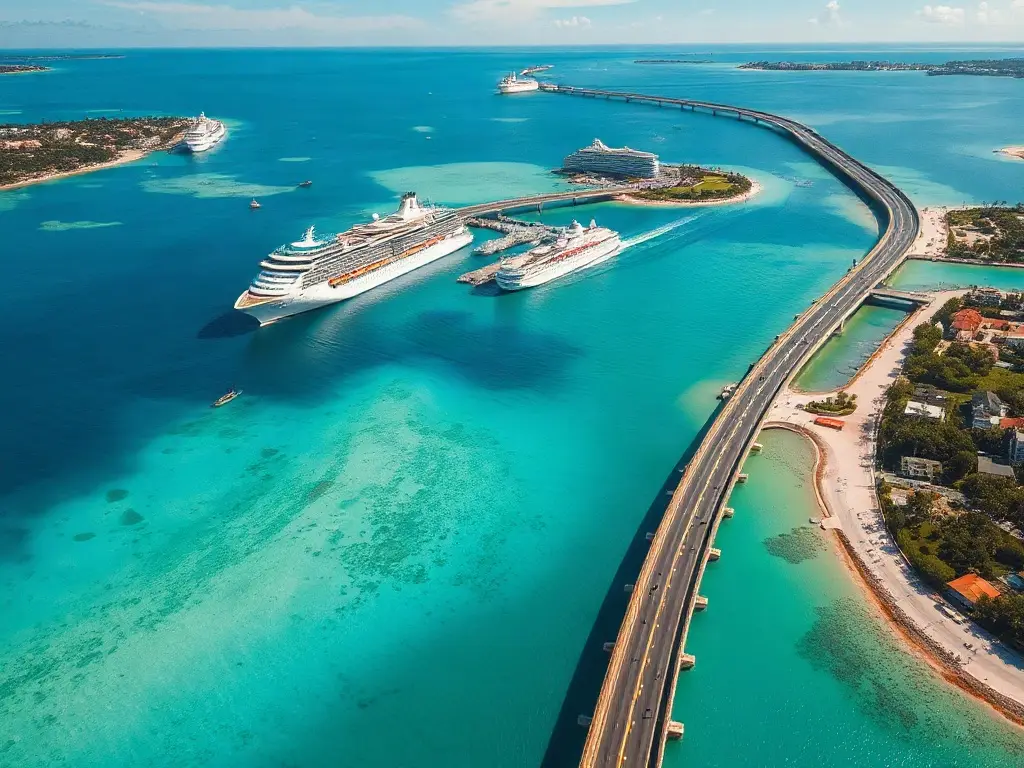
Port Canaveral, on Florida’s Space Coast, is one of the busiest cruise ports anywhere, and most of its passengers fly into Orlando.
Orlando International Airport to Port Canaveral
Orlando International Airport (MCO) is about 45 miles from the port. The main route is State Road 528, known as the Beachline, a toll road. Expect 45 to 60 minutes under normal conditions. Because of the distance, travelers choose among shared shuttles, cruise line buses, rideshare, and private transfers, and groups often find a single private van the best value. Read our full MCO to Port Canaveral guide.
Orlando Sanford to Port Canaveral
Orlando Sanford International Airport (SFB) is a smaller airport north of Orlando served mainly by budget carriers. It is roughly 60 miles from Port Canaveral, a 60- to 80-minute drive, and fewer shuttles operate from it. Book ground transportation before you fly. See Sanford Airport to Port Canaveral.
A note on rocket launches
The Space Coast is home to Cape Canaveral Space Force Station and Kennedy Space Center. Launch days can draw large crowds and affect traffic near the port. If your sailing coincides with a launch, check the schedule and leave earlier.
Tampa: Port Tampa Bay transportation
Tampa International Airport (TPA) is about 9 to 10 miles from the Port Tampa Bay cruise terminals near the Channel District. Most rides take 15 to 25 minutes via I-275. It is one of Florida’s more relaxed embarkation experiences. See Tampa Airport to Port Tampa Bay.
Texas: Galveston cruise port transportation
The Port of Galveston is the main cruise port in Texas. Houston has two major airports, and the difference between them matters.
Houston Hobby to Galveston
William P. Hobby Airport (HOU) is the closer airport, about 40 to 45 miles from the cruise terminals. Expect 45 to 60 minutes on I-45 South, across the Galveston Causeway. Read Hobby Airport to Galveston.
Bush Intercontinental to Galveston
George Bush Intercontinental Airport (IAH) is north of Houston, about 70 miles from Galveston. The drive typically takes 75 minutes to 1 hour 45 minutes, depending on traffic. If you fly into IAH, consider a hotel in Galveston the night before. See IAH to Galveston.
Louisiana: New Orleans cruise port transportation
Louis Armstrong New Orleans International Airport (MSY) is about 15 to 20 miles from the cruise terminals on the Mississippi River near downtown. The ride takes 25 to 40 minutes. Many travelers spend a night in the French Quarter first. Read New Orleans Airport to cruise port transportation.
California: Los Angeles, Long Beach, and San Diego
Southern California has three distinct cruise ports, and confusing them is a common mistake.
LAX to the World Cruise Center in San Pedro
The Port of Los Angeles cruise terminal, the World Cruise Center, is in San Pedro, about 20 miles from LAX. Drive times range from 30 to 60 minutes depending on traffic on the I-405 and I-110. Most taxi and rideshare pickups at LAX happen at the LAX-it lot. See LAX to Los Angeles cruise port.
LAX to the Long Beach Cruise Terminal
The Long Beach Cruise Terminal, next to the historic Queen Mary, is a separate port about 20 to 25 miles from LAX. Long Beach Airport (LGB) is much closer if your flights work. See LAX to Long Beach Cruise Terminal.
San Diego Airport to the cruise terminal
San Diego International Airport sits on the bay only 2 to 3 miles from the B Street Cruise Ship Terminal. It is one of the shortest airport-to-port transfers in the country, usually about 10 to 15 minutes. See San Diego Airport to cruise port.
Pacific Northwest: Seattle cruise terminals
Seattle is the leading U.S. homeport for Alaska cruises and has two main cruise terminals.
Pier 91: Smith Cove Cruise Terminal
Pier 91 is north of downtown in the Interbay area, about 20 miles from Seattle-Tacoma International Airport (SEA). Plan on 30 to 50 minutes. Light rail does not go to Pier 91. See Seattle Airport to Pier 91.
Pier 66: Bell Street Cruise Terminal
Pier 66 sits on the downtown waterfront, about 14 miles from SEA, typically 25 to 45 minutes by car. Light rail reaches downtown, but the final stretch is hard with luggage. See Seattle Airport to Pier 66.
Northeast: Cape Liberty in Bayonne
Cape Liberty Cruise Port in Bayonne, New Jersey, serves the New York metropolitan area. Newark Liberty International Airport (EWR) is the closest major airport, about 10 miles away, usually 20 to 35 minutes by car. Read Newark Airport to Cape Liberty.
Distance and time at a glance
The table below summarizes typical distances and drive times for every route we cover. These are planning estimates for normal traffic, not guarantees.
| Route | Approx. distance | Typical drive |
|---|---|---|
| MIA → PortMiami | 8–9 mi | 15–30 min |
| FLL → PortMiami | 28–30 mi | 40–60 min |
| FLL → Port Everglades | 2–3 mi | 10–20 min |
| MIA → Port Everglades | ~25 mi | 35–60 min |
| MCO → Port Canaveral | ~45 mi | 45–60 min |
| SFB → Port Canaveral | ~60 mi | 60–80 min |
| TPA → Port Tampa Bay | 9–10 mi | 15–25 min |
| HOU → Galveston | 40–45 mi | 45–60 min |
| IAH → Galveston | ~70 mi | 75–105 min |
| MSY → Port of New Orleans | 15–20 mi | 25–40 min |
| LAX → San Pedro (World Cruise Center) | ~20 mi | 30–60 min |
| LAX → Long Beach Cruise Terminal | 20–25 mi | 30–60 min |
| SEA → Pier 91 | ~20 mi | 30–50 min |
| SEA → Pier 66 | ~14 mi | 25–45 min |
| EWR → Cape Liberty | ~10 mi | 20–35 min |
| SAN → B Street Terminal | 2–3 mi | 10–15 min |
Marina transportation: airports to yachts
Not every traveler is heading to a cruise ship. Yacht charter guests, boat owners, and professional crew also need reliable rides from the airport to the docks. Marina transfers have their own quirks: gated access, specific docks, soft-sided luggage, provisions, and sometimes gear like dive bags or fishing equipment.
Miami Beach Marina
Miami Beach Marina, near South Pointe at the southern tip of Miami Beach, is about 11 to 13 miles from MIA, typically 20 to 35 minutes. Tell your driver the dock or charter office, not just the marina name. See MIA to Miami Beach Marina.
Bahia Mar in Fort Lauderdale
Bahia Mar Yachting Center is about 4 to 5 miles from FLL. During the Fort Lauderdale International Boat Show, traffic and closures around the marina are significant, so plan accordingly. See FLL to Bahia Mar.
Shelter Island in San Diego
Shelter Island’s marinas and yacht clubs are only about 3 miles from San Diego International Airport, roughly a 10-minute drive. See SAN to Shelter Island.
Tips for marina arrivals
- Get the exact dock, slip, or meeting point from your captain or charter company.
- Ask about gate codes and parking or drop-off rules.
- Use soft-sided bags when possible; many yachts have limited storage.
- If you are provisioning on the way, tell the driver so the stop is planned.
- For crew changes, share the yacht’s name with the driver.

How early to arrive at the cruise port
Arrive at the terminal at the start of the check-in window your cruise line assigns you, and never after the check-in cutoff, which is often 60 to 90 minutes before departure. If you are flying, the safest plan is to arrive in your port city the day before. A same-day flight should land at least four to five hours before sailing.
Cruise lines increasingly assign arrival times to spread out crowds. Your boarding pass or online check-in will show it. Arriving much earlier than your slot usually means waiting outside the terminal; arriving late risks being denied boarding.
Sample embarkation-day plan
- Wake up at your pre-cruise hotel and eat breakfast.
- Check your cruise documents: terminal, arrival window, ID, and boarding pass.
- Pack medications, documents, and a change of clothes in a carry-on.
- Leave for the port with a buffer of at least 30 minutes beyond the normal drive time.
- Drop checked luggage with a porter at the terminal curb.
- Go through security and check-in.
- Board the ship and enjoy your first afternoon at sea.
Why fly in the day before?
Flight delays and cancellations happen every day. If your flight is delayed by three hours on the morning of your cruise, you may miss the ship. Cruise lines are not required to wait for independently booked flights. A night in the port city turns a potential disaster into a minor inconvenience. Read the full guide: How early to arrive at the cruise port.
What time to book your flight home
For most U.S. cruise ports, book domestic flights departing no earlier than about 11 a.m. to noon, and international flights in the afternoon. If the airport is far from the port, such as MCO from Port Canaveral or IAH from Galveston, choose an even later flight.
On the last morning, the ship docks early, clears arrival procedures, and releases guests in groups. You then collect your luggage, pass through U.S. Customs and Border Protection, and head to the curb. Every step can take longer than expected.
| Step | Time to allow |
|---|---|
| Disembarkation and customs | 1–3 hours |
| Transfer to a nearby airport | 15–30 minutes plus waiting |
| Transfer to a distant airport | 60–120 minutes |
| Airport check-in and security | 2 hours domestic, 3 hours international |
Self-assist disembarkation, where you carry your own bags off the ship, usually gets you off earliest. It is a good choice if you have a tighter flight and can manage your luggage. For full details, see What time to book a flight after a cruise.
Traveling with children and car seats
Child passenger safety is not optional, even on a 15-minute ride. The National Highway Traffic Safety Administration (NHTSA) recommends rear-facing seats for infants and young toddlers, then forward-facing seats with a harness, then booster seats until an adult seat belt fits correctly. State laws set minimum requirements and can treat taxis and for-hire vehicles differently.
Practical options for families
- Bring your own car seat. You know its history and how to install it. Many airlines let you check car seats, and cruise lines generally allow them as luggage.
- Book a private transfer that confirms the seat. Ask for the specific type: infant, convertible, or booster.
- Use a rideshare car-seat option where available, but note it is limited to certain cities and seat types.
When you request a transfer, tell us each child’s age so we can confirm what we can provide. Read more in cruise port transportation with car seats.
Wheelchair accessible transportation
Accessible transfers require advance planning because ramp and lift vehicles are limited. When booking, share:
- Whether the wheelchair or scooter is manual or powered.
- Whether it folds.
- Approximate weight and dimensions.
- Whether the traveler can transfer to a vehicle seat.
- The number of companions and bags.
Request airport wheelchair assistance through your airline and terminal assistance through your cruise line’s accessibility department. The U.S. Department of Transportation publishes air traveler rights for passengers with disabilities. Our wheelchair accessible cruise port transportation guide explains vehicle types in detail.
Large groups and families
Group travel is where transfers most often go wrong. A family of eight booking four separate rideshares at a busy terminal can easily end up split across the airport, waiting for cars, and arriving at the port at different times.
Six rules for group transfers
- Collect every flight number in one shared list.
- Count luggage honestly, including strollers and car seats.
- Choose one vehicle big enough for people and bags, or plan two vehicles together.
- Pick a single meeting point at the airport.
- Assign one group contact to communicate with the driver.
- Get the quote in writing, including waiting time and tolls.
See cruise port transportation for large groups for a vehicle-size chart.
Luggage: what fits where
Luggage is the hidden variable in every transfer. The table below gives typical capacities. Real capacity depends on the specific vehicle and how many seats are occupied.
| Vehicle | Typical passengers | Large suitcases (approx.) |
|---|---|---|
| Sedan | 3–4 | 2 plus carry-ons |
| SUV | 5–6 | 3–5 depending on seats used |
| Minivan | 6–7 | 4–6 with rear seats up |
| Passenger van (Sprinter-type) | 10–14 | Varies; less with every seat filled |
Packing tips for transfer day
- Keep passports, ID, boarding documents, medications, and valuables in your carry-on.
- Attach your cruise line luggage tags before you leave the hotel.
- Pack a day bag with swimwear and sunscreen; checked bags may arrive at your cabin late in the afternoon.
Costs: what affects the price of a transfer
We do not publish made-up fares, because transfer prices depend on factors that change daily. Here is what drives the cost of each option so you can compare intelligently.
Factors that affect every ride
- Distance and time: Longer routes cost more, especially on meters.
- Tolls: Routes such as SR 528 in Central Florida or express lanes on I-95 add tolls.
- Vehicle size: Vans and SUVs cost more than sedans.
- Time of day and demand: Rideshare prices rise when demand peaks.
- Waiting time: Delayed flights or slow disembarkation can add waiting charges with some providers.
- Airport fees: Some airports charge pickup fees that are passed on to riders.
How to compare fairly
- Compare per-vehicle cost for groups and per-person cost for shuttles.
- Ask whether tolls, fees, and waiting time are included.
- Check the regulated taxi rate where one exists.
- Factor in time: a 20-minute wait in a taxi line on a hot curb has a cost too.
Tipping
Tipping drivers is customary in the United States. Many travelers tip around 15 to 20 percent, more for heavy luggage help. Cruise terminal porters who take your checked bags are also customarily tipped per bag.
Common mistakes and how to avoid them
The same transfer problems appear again and again in traveler questions and official port FAQs.
- Booking a tight same-day flight. A delay can cost the whole vacation.
- Telling the driver only “the cruise port.” Big ports have many terminals; give the terminal number or name.
- Confusing similar ports. San Pedro and Long Beach are different; so are Pier 91 and Pier 66 in Seattle.
- Underestimating luggage. A sedan does not fit four adults and four large cases.
- Ignoring weekend traffic. Saturday and Sunday mornings are peak times at Florida ports.
- Packing documents in checked luggage. Keep ID and boarding documents with you.
- Booking an early flight home. Disembarkation and customs can take hours.
- Assuming every car has a car seat. Most do not.
- Not reconfirming an accessible vehicle. Reconfirm the day before.
- Relying on one plan. Know your backup: the taxi stand, a second rideshare app, or the cruise line bus.
Safety and licensing: questions to ask any provider
Whether you book with us or anyone else, a few questions help you choose a reputable provider.
- Is the vehicle commercially licensed and insured for passenger transport in that state or county?
- Is the price quoted per vehicle, and what is included?
- What happens if my flight is delayed?
- What is the cancellation policy?
- How will I find the driver at the airport or port?
- Can you accommodate car seats or wheelchairs, and will you confirm in writing?
Airports and ports regulate who may pick up passengers on their property. Licensed providers follow those rules, including designated pickup areas.
Our approach
Marina Taxi is a small, independent transfer request service and travel resource. Our goal is simple: help travelers understand their options honestly, then make it easy to request a private ride when that is the right choice. We do not invent reviews, ratings, or customer counts, and we do not claim affiliation with cruise lines, airports, or port authorities.
When you send a request, we reply with availability and a written fare before anything is booked. There is no online payment and no account to create. Read more about us and our editorial policy.
Official resources
Always confirm current rules with official sources:
- PortMiami (Miami-Dade County)
- Port Everglades (Broward County)
- Port Canaveral
- Port Tampa Bay
- Port of Galveston
- Port of Los Angeles
- Port of Seattle
- U.S. Customs and Border Protection: cruise travel
- NHTSA: car seats and booster seats
Pre-cruise hotel stays: where to sleep the night before
The single most effective way to protect your cruise is to sleep in the port city the night before. It removes flight risk, shortens the morning transfer, and lets you start the trip rested. Where you stay changes how you get to the ship.
Miami
Downtown Miami and the Bayside area are closest to PortMiami, often a 10- to 15-minute ride. Brickell offers more hotel choices and restaurants and adds only a few minutes. Miami Beach is the vacation choice: beach time the afternoon before and a scenic ride across the MacArthur Causeway in the morning. Airport hotels near MIA work well for late-night arrivals and are still only 15 to 30 minutes from the port.
Fort Lauderdale
Hotels near FLL and in Dania Beach are extremely close to Port Everglades. Fort Lauderdale beach hotels along A1A combine an ocean view with a short morning ride. Many properties offer cruise packages that include parking or a shuttle, so ask when booking.
Central Florida
For Port Canaveral, most travelers choose between an Orlando airport hotel and a beach hotel in Cocoa Beach or Cape Canaveral. Sleeping near the port means a short morning transfer and avoids the 45-mile drive under time pressure. Staying near MCO makes sense if you land late at night and prefer to do the longer drive in daylight with plenty of buffer.
Galveston and Houston
Galveston Island hotels place you minutes from the terminals. If you land at IAH in the evening, staying on the island means you cross Houston once, without a deadline.
Seattle, Los Angeles, and San Diego
In Seattle, downtown waterfront hotels are convenient for Pier 66; Pier 91 guests often stay downtown as well and take a short ride. In Los Angeles, San Pedro and Long Beach both have hotels close to their terminals, so choose the one that matches your port. San Diego’s downtown and harbor hotels are near both the airport and the B Street terminal.
Hotel-to-port transfer tips
- Ask the front desk the night before how long the ride usually takes on cruise mornings.
- Check out early; many hotels will hold bags if you want a final breakfast.
- If several cruise guests share your hotel, expect a rush for taxis at the same hour. A pre-booked ride avoids it.
- Keep your cruise luggage tags on your bags so porters can process them quickly.
International travelers arriving in the United States
Many cruise passengers start their trip with an international flight into Miami, Fort Lauderdale, Orlando, Houston, Los Angeles, Seattle, or Newark. Arriving from abroad adds steps that affect your transfer timing.
Plan for immigration and customs at the airport
International arrivals clear U.S. Customs and Border Protection (CBP) at the first U.S. airport where they land. Lines vary widely by time of day and the number of flights arriving together. Programs such as Global Entry or Mobile Passport Control, where eligible, can shorten waits. Check CBP’s official travel pages for current entry requirements and programs.
Leave a larger buffer
Because immigration lines are unpredictable, international travelers should avoid same-day flights into a cruise. If you must, choose a flight landing very early and tell your transfer provider your flight number so they can track your arrival.
Documents for the cruise
Your cruise line sets document requirements for boarding, which may differ from airline requirements. Non-U.S. citizens should confirm passport validity and any visa or electronic travel authorization requirements well in advance.
Currency and payment
U.S. taxis and rideshares generally accept major credit cards, but it is helpful to carry some U.S. dollars for tips to drivers and terminal porters.
Seasons, weather, and holidays
Cruise demand and road conditions change through the year. Planning around them reduces surprises.
Peak cruise season in Florida
Florida’s homeports are busiest in winter and spring, when Caribbean itineraries are most popular, and around school holidays. Weekend mornings during these periods produce the longest taxi lines and the highest rideshare prices.
Hurricane season
The Atlantic hurricane season officially runs from June 1 to November 30. Storms can change itineraries, delay ship arrivals, or affect flights. Cruise lines communicate changes directly to booked guests. If a storm affects your port city, reconfirm both your sailing and your ground transfer. The National Hurricane Center is the official source for tropical forecasts.
Alaska season in Seattle
Seattle’s cruise season is concentrated in the spring and summer months, with Saturdays and Sundays especially busy. Book ground transportation early for peak summer weekends.
Holidays and events
Major events, from Super Bowl weekends in host cities to Mardi Gras in New Orleans and the Fort Lauderdale International Boat Show, increase traffic and hotel demand. If your sailing overlaps with a big event, leave earlier and book transfers in advance.
Embarkation day checklist
Print this list or save it on your phone.
The night before
- Confirm your terminal and arrival window in your cruise line’s app or documents.
- Complete online check-in and save your boarding pass.
- Attach luggage tags.
- Confirm your transfer time and the driver’s contact details.
- Set out passports or ID, medications, and chargers in your carry-on.
The morning of
- Eat a good breakfast; the ship’s lunch may not be immediately available.
- Leave the hotel with a traffic buffer.
- Keep phones charged for boarding passes and ride apps.
- Hand checked bags to porters and keep your carry-on with you.
At the terminal
- Have ID and boarding documents ready for security and check-in.
- Follow terminal staff directions; many ports use staggered boarding groups.
- Once aboard, check your cabin assignment and the time of the mandatory safety briefing.
Disembarkation day checklist
The night before
- Choose self-assist or luggage-tag disembarkation based on your flight time.
- Pack checked bags and place them outside your cabin if instructed.
- Keep a change of clothes, documents, and medications in your carry-on.
- Reconfirm your pickup time if you pre-booked a transfer.
The morning of
- Listen for your group to be called.
- Have passports or ID ready for customs.
- Collect your luggage in the terminal hall.
- Head to the ground-transportation area and look for your driver or the taxi stand.
Glossary of cruise transfer terms
All-aboard time: The time by which every guest must be back on the ship, at embarkation or at ports of call.
Check-in window: The arrival time slot your cruise line assigns for embarkation.
Disembarkation: Leaving the ship at the end of the cruise.
Embarkation: Boarding the ship at the start of the cruise.
Flat rate: A fixed, regulated taxi fare for a specific route, such as MIA to PortMiami, instead of the meter.
Ground transportation area: The signed zone where taxis, rideshares, and pre-arranged vehicles pick up passengers at an airport or port.
Homeport: The port where a cruise begins and ends.
LAX-it: The dedicated taxi and rideshare pickup lot at Los Angeles International Airport.
Porter: A terminal worker who takes checked luggage from the curb to the ship. Tipping is customary.
Self-assist: Disembarking while carrying all your own luggage, usually the fastest way off the ship.
Surge pricing: Higher rideshare prices during periods of high demand.
Turnaround day: The day a ship ends one cruise and begins the next, with thousands of guests leaving and boarding.
Port-by-port quick tips
Each homeport has its own quirks. These short notes summarize what travelers most often need to know before the ride.
PortMiami
PortMiami sits on an island connected to downtown by a single main bridge, Port Boulevard. That bridge is the bottleneck on busy mornings, so a ride that takes 15 minutes on a Tuesday can take 45 minutes on a Saturday. Terminals are identified by letters or names and are spread along the island, which is why telling your driver the exact terminal matters. Taxis from MIA use a flat county rate.
Port Everglades
Port Everglades is a secured port with checkpoints at the entrances. Drivers and passengers may be asked for identification, so keep IDs out of checked bags. The terminals are numbered and spread across the port, and the airport is so close that some travelers arrive at the port before check-in opens. If you land early, waiting at the airport is often more comfortable than waiting at a closed terminal.
Port Canaveral
Port Canaveral is a long drive from Orlando’s airports, and the road is a toll highway. Shared shuttles are common, but private vans make sense for families. Rocket launches from the nearby Space Coast can draw large crowds, so check whether one is scheduled on your travel day. Cocoa Beach is a convenient place to stay the night before.
Port Tampa Bay
Tampa’s cruise terminals sit downtown near the Channel District, a short ride from the airport. Weekday rush hour on I-275 is the main variable. Downtown hotels and the Channel District offer walkable dining the night before.
Galveston
Hobby Airport is much closer to Galveston than Bush Intercontinental. Weekend traffic onto the island can be heavy in summer, and severe weather on the Gulf can affect timing. If you fly into IAH, consider sleeping on the island the night before.
New Orleans
The cruise terminals are on the riverfront close to the French Quarter and Warehouse District. Many travelers add a night or two in the city before sailing. Big events, especially during Carnival season, can clog downtown streets.
Los Angeles and Long Beach
Southern California’s two main cruise terminals are different ports. The World Cruise Center is in San Pedro, and the Long Beach Cruise Terminal is next to the Queen Mary. Most taxi and rideshare pickups at LAX use the LAX-it lot, reached by shuttle from the terminals. Long Beach Airport is a convenient alternative for Long Beach sailings when flights are available.
Seattle
Pier 91 (Smith Cove) and Pier 66 (Bell Street) are on opposite sides of downtown. Light rail serves downtown but not Pier 91, and the walk from a downtown station to Pier 66 is hilly with luggage. Summer weekends are the peak of the Alaska season.
Cape Liberty
Cape Liberty in Bayonne is closest to Newark Liberty International Airport. New York-area traffic is notoriously unpredictable, so build in extra time even though the distance is short.
San Diego
San Diego offers one of the easiest airport-to-ship transfers in the country, with the airport and the B Street Cruise Ship Terminal both on the bay. Confirm whether your ship uses B Street or the Port Pavilion on Broadway Pier.
How we can help
Marina Taxi accepts private transfer requests for airport, hotel, cruise terminal, and marina rides. You send the details; we reply with what we can offer and a written fare. If we cannot serve your route or date, we tell you so, and you can use the guides on this site to choose another option with confidence.
- No account and no online payment. The request opens in your own email app.
- Clear quotes. Ask us what is included, from tolls to waiting time.
- Honest answers. If a car seat or accessible vehicle is not available for your date, we will say so.
Putting it all together
Airport to cruise port transportation does not have to be the most stressful part of your vacation. The pattern is the same in every U.S. homeport:
- Know the distance between your airport and your port, and choose the ride type that fits it.
- Count people and bags honestly, and book a vehicle big enough for both.
- Arrive early, ideally the day before, and reach the terminal at the start of your check-in window.
- Know your terminal, and give the driver its exact name or number.
- Book flights home late enough to absorb disembarkation, customs, and traffic.
- Plan special needs ahead, from car seats to wheelchairs to yacht provisions.
- Have a backup, whether that is the taxi stand, a second rideshare app, or the cruise line bus.
When a planned, private ride is the right choice for your trip, we are here to help. Request a transfer with your details, and we will reply with availability and a written fare.
Every transfer guide on this site
Miami Cruise Port (PortMiami)
- Downtown Miami to PortMiami Transportation
- Fort Lauderdale Airport to PortMiami Transportation
- Miami Airport to PortMiami Transportation
- Miami Beach to PortMiami Transportation
- PortMiami to Miami Airport After a Cruise
- Taxi vs Uber to PortMiami
Fort Lauderdale Cruise Port (Port Everglades)
- Fort Lauderdale Airport to Port Everglades Transportation
- Fort Lauderdale Hotels to Port Everglades Transportation
- Miami Airport to Port Everglades Transportation
- Port Everglades to Fort Lauderdale Airport After a Cruise
Other U.S. Cruise Ports
- Houston Hobby Airport to Galveston Cruise Port Transportation
- IAH to Galveston Cruise Port Transportation
- LAX to Long Beach Cruise Terminal Transportation
- LAX to Los Angeles Cruise Port Transportation
- New Orleans Airport to Cruise Port Transportation
- Newark Airport to Cape Liberty Cruise Port Transportation
- Orlando Airport to Port Canaveral Transportation
- Sanford Airport to Port Canaveral Transportation
- Seattle Airport to Pier 91 Transportation
- Seattle Airport to Pier 66 Transportation
- Tampa Airport to Tampa Cruise Port Transportation
- San Diego Airport to Cruise Port Transportation
Marina Transportation
- Fort Lauderdale Airport to Bahia Mar Transportation
- Miami Airport to Miami Beach Marina Transportation
- San Diego Airport to Shelter Island Transportation
Cruise Transfer Planning
- Cruise Port Transportation for Large Groups
- Cruise Port Transportation with Car Seats
- How Early to Arrive at the Cruise Port
- What Time to Book a Flight After a Cruise
- Wheelchair Accessible Cruise Port Transportation
Frequently asked questions
What is the best way to get from the airport to the cruise port?
It depends on distance, group size, and luggage. For short routes such as FLL to Port Everglades, a taxi or rideshare is simple. For families, groups, car seats, or long routes such as Orlando to Port Canaveral, a pre-booked private transfer is usually easier and more predictable.
How do I request a transfer from Marina Taxi?
Fill in the short request form with pickup, drop-off, date, time, passengers, and bags. It opens a pre-written message in your email app. We reply with availability and a written fare. Nothing is booked or charged until you confirm.
Do you take payment online?
No. The website does not collect payment or card details. Fare and payment arrangements are confirmed directly in writing before your ride.
How long is the ride from Miami airport to PortMiami?
Miami International Airport is about 8 to 9 miles from PortMiami. Most rides take 15 to 30 minutes, longer on busy weekend cruise mornings.
Is there a flat taxi fare from MIA to PortMiami?
Yes. Miami-Dade County sets a flat taxi rate between Miami International Airport and PortMiami. Because the amount is updated periodically, check the current rate posted at the MIA taxi stand.
How early should I arrive at the cruise terminal?
Arrive at the start of the check-in window your cruise line assigns. Check-in usually closes 60 to 90 minutes before departure. If flying, arriving in the port city the day before is safest.