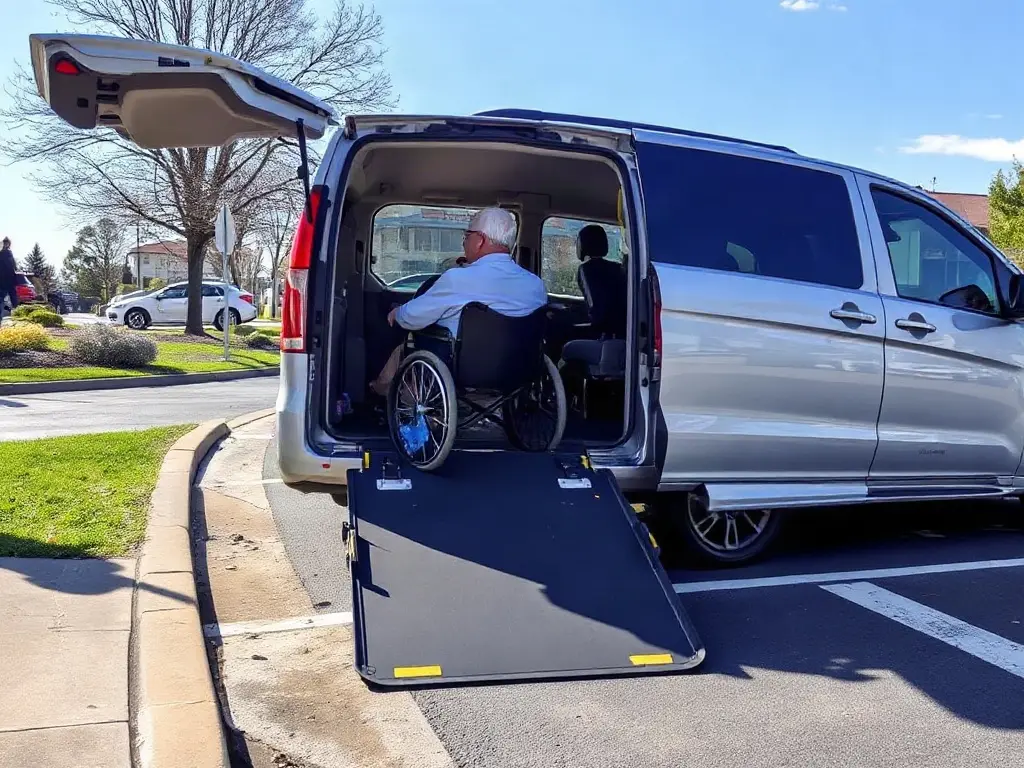
Accessible transportation makes the difference between a stressful embarkation and a calm one. Here is what to plan.
Information to give the provider
- Manual or power wheelchair or scooter.
- Folding or rigid frame.
- Approximate weight and dimensions.
- Whether the traveler can transfer to a vehicle seat.
- Number of companions and luggage.
Vehicle types
| Vehicle | Works for | Notes |
|---|---|---|
| Standard car | Folding manual chairs, able to transfer | Chair goes in trunk |
| Side-ramp minivan | Most manual and many power chairs | Limited luggage space |
| Rear-entry van or lift van | Larger power chairs, scooters | Check height clearance |
At the airport and port
- Request airport wheelchair assistance through your airline.
- Request terminal assistance through your cruise line’s accessibility department.
- The U.S. Department of Transportation explains air traveler rights; see DOT disability resources.
Send us the details and we will tell you honestly whether we can provide a suitable vehicle for your date.
Planning the whole journey, not just the ride
For travelers who use wheelchairs, scooters, or other mobility aids, the transfer between airport and cruise port is one link in a longer chain: the flight, airport assistance, the ground transfer, terminal assistance, and accessible cabins and facilities on board. Planning each link in advance reduces stress and the risk of gaps.
| Journey step | Who to contact | What to arrange |
|---|---|---|
| Flight | Airline | Wheelchair assistance, mobility device handling, seating |
| Arrival airport | Airline (assistance is airline-provided at U.S. airports) | Help from gate to curb |
| Ground transfer | Transfer provider | Ramp or lift vehicle, securement |
| Cruise terminal | Cruise line’s accessibility department | Terminal wheelchair assistance, priority boarding where offered |
| On board | Cruise line | Accessible cabin, equipment rental, special needs |
Air travel rights
The U.S. Department of Transportation enforces the Air Carrier Access Act, which sets rules for how airlines serve passengers with disabilities, including assistance and handling of mobility devices. Learn more at DOT’s resources for passengers with disabilities. Request assistance when booking and again at check-in.
Understanding accessible vehicles
Side-entry ramp minivans
These vans have a lowered floor and a ramp that deploys from the side door. A wheelchair user can roll in and be secured in place. They work for many manual and power wheelchairs, but have limited luggage space when the ramp area is in use.
Rear-entry ramp vans
The ramp deploys from the back of the van. These can accommodate a wide range of chairs, sometimes with more seating flexibility for companions.
Lift-equipped vans and buses
A hydraulic lift raises the wheelchair and user into the vehicle. These are often used for larger power chairs, heavier scooters, or group transport. Check maximum lift weight and platform dimensions.
Standard vehicles
Travelers who can transfer to a seat and use a folding manual wheelchair may ride in a standard car or SUV, with the chair stored in the trunk. Confirm trunk space when luggage is involved.
Information your provider needs
When requesting an accessible transfer, be specific:
- Type of mobility device: manual wheelchair, power wheelchair, scooter, or walker.
- Whether it folds or disassembles.
- Approximate weight with batteries.
- Dimensions: width, length, and seated height of the user in the chair.
- Whether the user can transfer to a vehicle seat.
- Number of companions and luggage.
- Any medical equipment, such as oxygen concentrators.
Seated height matters because some vans have limited headroom at the door.
Securement and safety
In ramp and lift vehicles, wheelchairs should be secured using a four-point tie-down system, and the occupant should use a lap and shoulder belt. Drivers should be trained in securement. Do not hesitate to ask the driver to check or adjust securement before departure.
Scooters and power chairs on cruises
Cruise lines have rules about the size and type of mobility devices allowed on board and in cabins. Many lines allow travelers to rent scooters or wheelchairs that are delivered to the ship. Check with your cruise line’s accessibility department and consider renting equipment delivered to the ship to simplify the transfer.
Example plans
These are illustrative examples.
Traveler using a folding manual wheelchair, able to transfer. A standard SUV may work, with the chair folded in the cargo area. Confirm luggage space.
Traveler using a power wheelchair, not able to transfer. Book a ramp or lift van in advance, share chair dimensions and weight, and reconfirm the day before.
Group with one wheelchair user and five companions. Book a lift-equipped passenger van that seats the group together.
Port-specific considerations
- Short routes like FLL to Port Everglades or SAN to the B Street terminal are quick, but accessible vehicles still need to be booked in advance.
- Long routes like MCO to Port Canaveral or IAH to Galveston make comfort and securement even more important.
- Seattle’s downtown hills make door-to-door transport important for Pier 66 visitors.
- Port security checkpoints, such as at Port Everglades, may require you to show ID from the vehicle.
Terminal assistance
Most cruise terminals offer wheelchair assistance and accessible check-in areas. Request this through your cruise line in advance. Some lines offer priority boarding for guests with mobility needs. On disembarkation day, ask the cruise line about assisted disembarkation and coordinate your transfer pickup time accordingly.
Booking timeline
Accessible vehicles are limited in number, especially on busy weekends. Book as early as possible, ideally when you book your cruise and flights. Reconfirm details 48 hours and again 24 hours before pickup.
Other accessibility needs
Accessibility includes more than wheelchairs. Travelers who are blind or have low vision, who are deaf or hard of hearing, or who have cognitive disabilities may also need specific support. Service animals have particular rules on airlines and cruise lines; check policies in advance.
Children with disabilities
Children may require specific restraint systems. Discuss requirements in advance and see cruise transfers with car seats.
Groups
For family groups including wheelchair users, see cruise port transportation for large groups.
Checklist
- Arrange airline assistance when booking flights.
- Book an accessible vehicle with full device details.
- Request terminal assistance through the cruise line.
- Consider renting a scooter or wheelchair delivered to the ship.
- Reconfirm all arrangements before travel.
The bottom line
Accessible cruise travel works best when every step is planned. Share detailed information about your mobility device, book accessible vehicles early, coordinate with your airline and cruise line, and reconfirm before you travel. With preparation, the transfer can be smooth and dignified.
Frequently asked questions
Do I need to book an accessible van in advance?
Yes. Ramp and lift vehicles are limited, so reserve as early as you can and reconfirm the day before.
Can a power wheelchair fit in a standard taxi?
Usually not. Power chairs are heavy and generally need a ramp or lift vehicle.
Before you travel: times and policies change. Confirm terminal assignments with your cruise line and ground-transportation rules on the official airport or port website. Learn more in our complete guide to airport to cruise port transportation.